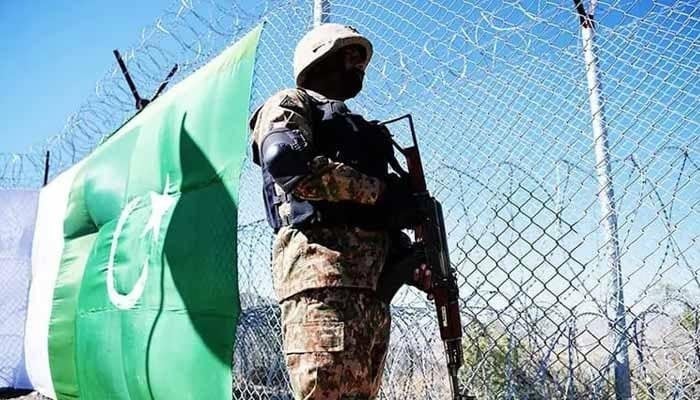
The decision to launch Operation Ghazab Lil Haq was not just a military maneuver; it was a definitive statement of the state’s clarity and resolve. After a long delay, Pakistan chose to confront terrorism head-on, shedding years of ambivalence. Yet, the grisly attacks that continue to stalk the merged and settled districts of Khyber Pakhtunkhwa are a stark reminder that the threat has not diminished. It has mutated.
The impunity displayed by attackers from the Tehreek-e-Taliban Pakistan (TTP) and their virulent new variant, the Ittehad-e-Mujahideen-e-Pakistan (IMP), reflects a sinister determination to achieve their objectives despite suffering heavy losses at the hands of Pakistani law enforcement agencies (LEAs). To understand this persistence, one must conduct an honest appraisal of the underlying causes and enabling factors that sustain terrorism on both sides of the border.
The Smug Sanctuary: Afghanistan’s Internal Chaos
Afghanistan remains the primary source of terrorism, governed by a clique that seized Kabul through the power of the gun and is unburdened by public opinion or political settlement. The upshot of this reality is a smug and uncompromising Taliban leadership. Multiple factions within the regime are locked in a perpetual jockey for influence, united by a shared religio-political outlook and a history of fighting foreign intruders, but divided by a hunger for power.
This fragmentation prevents the Afghan Taliban from confronting the farraginous blend of terrorist outfits operating on its soil. The regime is split into distinct power centers. The ‘Kandahari’ faction, led by Mullah Hibatullah Akhundzada, wields both spiritual and temporal power from Kandahar and remains the most retrogressive in outlook. In contrast, the Haqqani group, with its Zadran tribal leadership, holds sway over eastern and northern regions, including Kabul. This faction possesses greater muscle power and is actively creating its own proxies, such as the IMP, to expand its reach outside Afghanistan.
A New Proxy War: The Rise of the IMP
As the TTP and its leader, Wali Mehsud, drew closer to the Kandahari faction, the Haqqanis strategically created the IMP as a countervailing force. The new outfit has rapidly grown in lethality, now possessing more suicide bombers than the TTP. It has absorbed other militant odds and ends, including Lashkar-e-Islam and Hafiz Gul Bahadur’s factions, extending its operational reach towards Kunar.
The battlefield is further crowded by Al Qaeda and the Islamic State Khorasan Province (ISKP), which maintains a sizeable presence in Nangarhar and Kunar. A dangerous convergence is underway. These terror outfits are now sharing intelligence and training expertise, acting as feeders for one another. They are well-armed with American weapons abandoned in Afghanistan and well-funded by an illicit war economy that thrives under the Taliban’s malgovernance.
External Abettors and Internal Challenges
The Taliban regime, completely bereft of diplomatic sense and international obligations, ignores UN resolutions demanding the denial of sanctuaries to terror networks. Under international isolation, it is lapping up illegal covert aid from countries like India for proxy warfare against Pakistan. Pakistani policymakers must recognize that the present Afghan rulers are inspired by both a warped ideology and Afghan irredentism.
While Pakistan’s kinetic response has created an impact, the failure to eliminate the top leadership of the TTP means their overall capacity to foment terror remains intact. Both the TTP and IMP are becoming more active on social media, using cellphone technology for recruitment, planning, and propaganda. This is an area where Pakistan’s cyber response needs considerable improvement.
Internally, the terrorists retain the capacity to launch attacks against civilian and LEA targets, finding refuge through coercive tactics and tribal affiliations among a fearful population. A unified national response is essential, requiring the Khyber Pakhtunkhwa government to lend a willing and effective hand to federal counterterrorism efforts.
While the LEAs maintain pressure, the political and diplomatic arms of the state must engage with elements wielding influence in the Afghan regime to achieve a breakthrough, keeping regional partners like China, Iran, and Central Asian states in the loop. There is a possibility of an internecine conflict pitting the Haqqanis and NRF against the Kandahari faction, which could reshape the landscape.
Ultimately, the battle against terrorism cannot be won by kinetic means alone. The people of the newly merged districts deserve the governance and development dividends they were promised. As counterinsurgency doctrine suggests, strengthening an active minority among the people to fight on behalf of the state is crucial. Pakistan’s long war requires not just military resolve, but a strategy that wins the peace.


